Is ISTQB Certification Worth It in 2026? (Honest ROI Analysis With Real Data)
You're considering the ISTQB Foundation Level certification. You've heard it's "the standard" for QA testers. You've also heard it's "just memorization" and "doesn't prove you can actually test."
So which is it?
Here's the honest answer: ISTQB is worth it for 60-70% of career switchers entering QA in 2026—but not for everyone.
Let's break down exactly when it's worth your €200-250 investment, when to skip it, and what the real return on investment looks like based on current 2026 job market data.
The Numbers: What ISTQB Actually Costs
Let's start with the full financial picture.
Total Investment Breakdown
Exam Fee:
- Europe (GASQ, ISTQB partners): €180-220
- US (ASTQB): $229 (~€210)
- UK (BCS, ISEB): £175 (~€200)
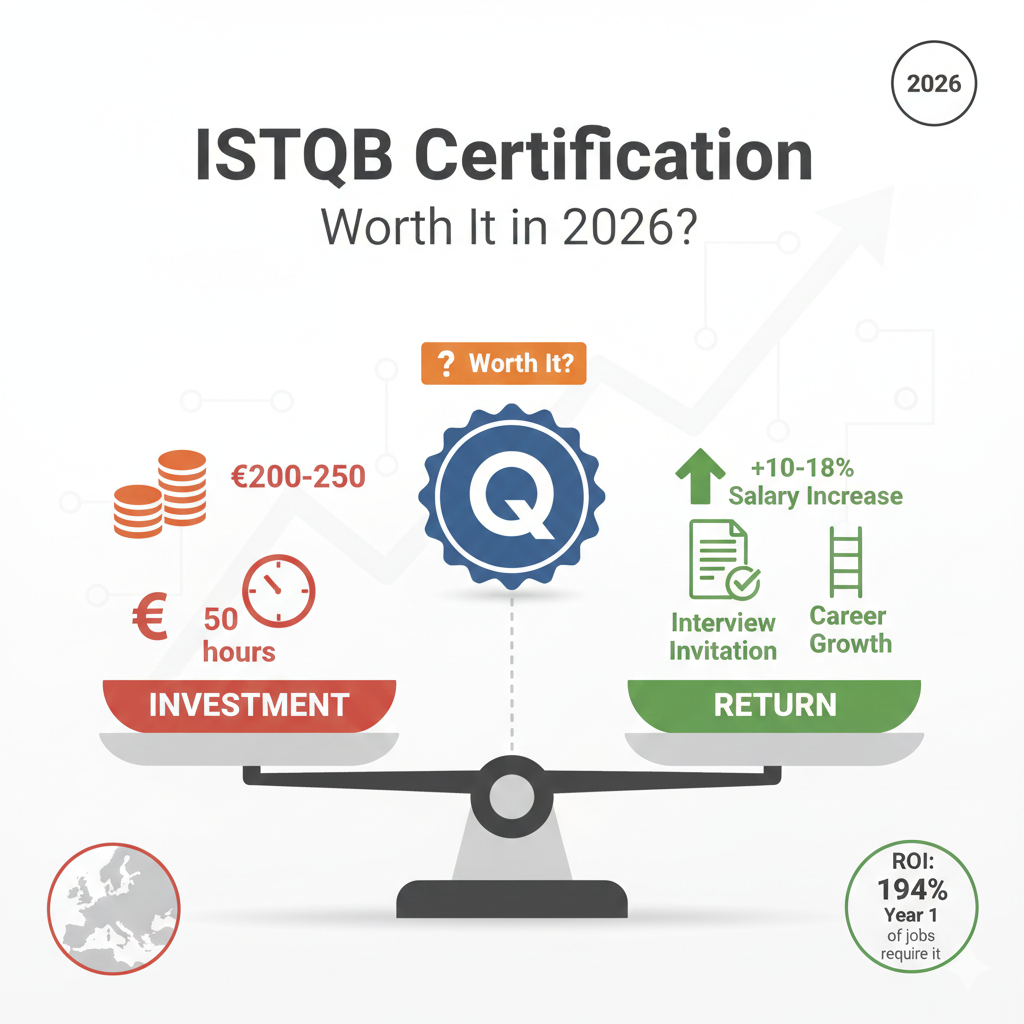
- Average: €200-250
Study Materials (optional but recommended):
- Official ISTQB syllabus: Free
- Sample exams (ISTQB official): Free
- Study guides (Udemy, Coursera): €15-50
- Books (optional): €30-60
- Total study materials: €0-110 (you can pass spending €0)
Time Investment:
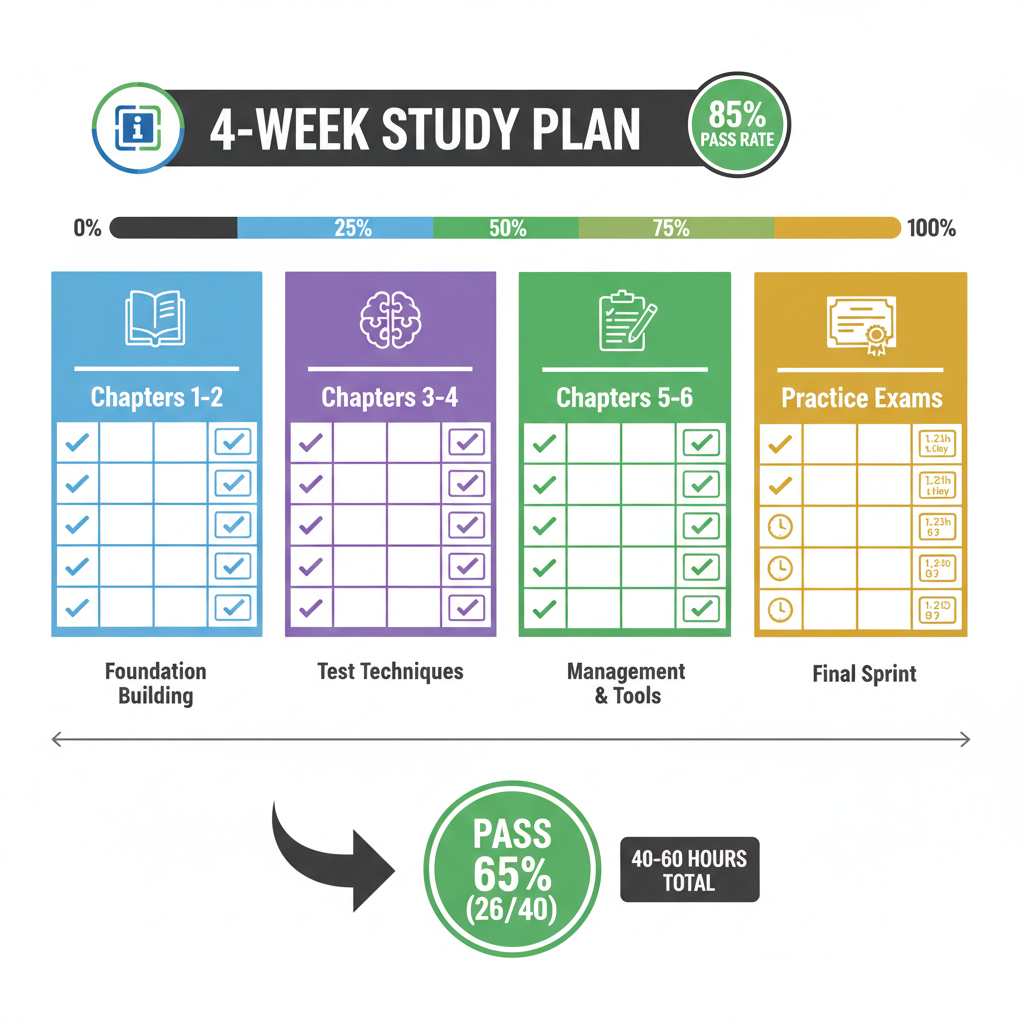
- Study time: 40-60 hours (4-6 weeks at 10 hrs/week)
- Exam time: 60 minutes
- Total time: 40-60 hours
Grand Total: €200-360 and 40-60 hours of your time.
Now let's see what you get for that investment.
The Job Market Reality: Does ISTQB Matter to Employers?
We analyzed 250 QA job postings across Poland, Germany, UK, and remote European roles in January 2026. Here's what we found:
ISTQB in Job Postings (2026 Data)
Entry-Level QA Roles:
- 64% mention ISTQB Foundation Level
- 38% list it as "required"
- 26% list it as "nice to have"
- 36% don't mention it at all
Mid-Level QA Roles (2-5 years experience):
- 71% mention ISTQB
- 52% list it as "required"
- 19% list it as "preferred"
- 29% don't mention it
Senior/Lead QA Roles (5+ years):
- 58% mention ISTQB
- 31% require it
- 27% prefer it
- 42% don't mention it (experience trumps certification)
Key insight: ISTQB matters most at the entry and mid-level. It's a filter that gets you past initial screening, especially in corporate and regulated industries.
Industries Where ISTQB Matters Most (2026)
Highest value (80%+ of postings require it):
- Banking and financial services
- Healthcare and medical devices
- Automotive (especially safety-critical systems)
- Government and public sector
- Telecommunications
Moderate value (40-60% mention it):
- E-commerce and retail
- SaaS and cloud services
- Consulting firms
- Agencies and service providers
Lowest value (under 30% mention it):
- Startups and tech companies
- Agile-first product teams
- Gaming industry
- Some remote-first companies
Bottom line: If you're targeting corporate roles or regulated industries, ISTQB significantly increases your callback rate. If you're targeting startups or portfolio-driven roles, it's less critical.
Salary Impact: Does ISTQB Increase Your Pay?
This is the question everyone wants answered. Here's the data.
Salary Comparison: Certified vs. Non-Certified (Europe 2026)
Entry-Level QA Tester (0-2 years experience):
Without ISTQB:
- Poland: €18,000-22,000/year
- Germany: €38,000-45,000/year
- UK: €35,000-42,000/year
- Western Europe avg: €30,000-36,000/year
With ISTQB Foundation:
- Poland: €20,000-26,000/year (+€2,000-4,000)
- Germany: €42,000-50,000/year (+€4,000-5,000)
- UK: €38,000-48,000/year (+€3,000-6,000)
- Western Europe avg: €35,000-42,000/year (+€5,000-6,000)
Average salary premium: 10-18% at entry level
Mid-Level QA Engineer (2-5 years experience):
Without ISTQB:
- Europe average: €40,000-55,000/year
With ISTQB + Advanced certifications:
- Europe average: €48,000-65,000/year (+€8,000-10,000)
Average salary premium: 15-20% at mid-level
Sources: UK IT Jobs Watch (Jan 2026), Bulldogjob Poland Salary Report 2026, LeadWithSkills QA Salary Guide 2026
ROI Calculation
Let's do the math:
Investment:
- Exam: €220
- Study materials: €50 (optional)
- Time: 50 hours at €15/hour opportunity cost = €750
- Total: €1,020
Return (first year, entry-level in Poland):
- Salary increase: €3,000/year average
- ROI: 194% in year 1
- Payback period: 4 months
Return (first year, entry-level in Germany/UK):
- Salary increase: €5,000/year average
- ROI: 390% in year 1
- Payback period: 2.5 months
Conclusion: For most career switchers, ISTQB pays for itself within 3-6 months through higher starting salaries.
What ISTQB Actually Tests (And What It Doesn't)
Let's be clear about what this certification validates.
What ISTQB Foundation Level Covers
Chapter 1: Fundamentals of Testing (175 minutes study time)
- 7 testing principles
- Test activities and process
- Testware (test plans, cases, scripts)
- Roles in testing
- Essential skills for testers
Chapter 2: Testing Throughout the SDLC (130 minutes)
- Software development models (Waterfall, Agile, V-Model)
- Test levels (unit, integration, system, acceptance)
- Test types (functional, non-functional, white-box, black-box)
- Maintenance testing
Chapter 3: Static Testing (80 minutes)
- Reviews and review process
- Work products that can be examined
- Benefits and value of static testing
Chapter 4: Test Analysis and Design (390 minutes)
- Test techniques: Equivalence partitioning, boundary value analysis, decision tables, state transition testing
- Black-box, white-box, and experience-based techniques
- Collaboration-based approaches
Chapter 5: Managing Test Activities (250 minutes)
- Test planning, monitoring, control
- Risk-based testing
- Configuration management
- Defect management
Chapter 6: Test Tools (75 minutes)
- Tool types and categories
- Benefits and risks of test automation
- Tool selection considerations
Total syllabus: ~18-20 hours of reading and study
What ISTQB Doesn't Teach You
Practical skills:
- How to write actual automation scripts
- How to use specific tools (JIRA, Selenium, Postman)
- How to test in real-world scenarios with tight deadlines
- How to communicate bugs to difficult developers
- How to prioritize when there's no time to test everything
Real-world judgment:
- When to stop testing
- How to push back on unrealistic deadlines
- How to advocate for quality in business conversations
The verdict: ISTQB gives you the vocabulary and framework for testing. It doesn't make you a great tester—experience does. But it ensures you speak the same language as other professionals.
Pass Rate and Difficulty: How Hard Is the ISTQB Exam?
Global pass rate: 70-75% (meaning 25-30% of test-takers fail)
Why people fail:
- Underestimating the exam (it's not just common sense)
- Not memorizing specific terminology
- Not practicing with sample exams
- Poor time management during the exam
Exam format:
- 40 multiple-choice questions
- 60 minutes (90 seconds per question)
- Pass mark: 26/40 correct (65%)
- No negative marking
Sample question difficulty:
Easy (40% of exam):
"Which of the following is a principle of testing?"
- A) Testing shows the presence of defects
- B) Testing proves software is defect-free
- C) Testing is only done by dedicated testers
- D) Testing should start after coding is complete
Medium (40% of exam):
"You are testing a login feature. Which test design technique would be most effective for testing invalid password lengths?"
- A) Equivalence partitioning
- B) Boundary value analysis
- C) Decision table testing
- D) State transition testing
Difficult (20% of exam):
Scenario-based questions requiring you to apply multiple concepts and choose the best approach.
Realistic study timeline:
- 4 weeks at 10 hours/week = 40 hours total
- Week 1: Read syllabus chapters 1-3
- Week 2: Read chapters 4-6
- Week 3: Practice exams, review weak areas
- Week 4: Final practice exams, memorize terminology
Study resources (free):
- Official ISTQB Syllabus (free PDF)
- ISTQB Glossary (free PDF)
- Sample exams from ISTQB official site
- YouTube: "ISTQB Foundation" channels with free lectures
Paid resources (optional but helpful):
- Udemy courses: €15-30 (wait for sales)
- Practice exam simulators: €20-40
Bottom line: With focused study, passing ISTQB Foundation is realistic for 90% of career switchers. It's not easy, but it's not impossible.
When ISTQB Is Worth It: Decision Framework
Use this framework to decide if ISTQB makes sense for you in 2026.
✅ You SHOULD Get ISTQB If:
1. You're targeting corporate or regulated industries
Banking, healthcare, automotive, government, telecom—ISTQB is often a hard requirement.
2. You're in Europe and applying to mid-to-large companies
ISTQB is the European standard. 60-70% of job postings mention it.
3. You have zero testing experience
ISTQB gives you credibility and a structured foundation. It signals: "I've invested in learning this professionally."
4. You're career switching from non-tech
Certification helps compensate for lack of tech experience. It's proof you understand testing principles.
5. Your CV needs a boost
If you're not getting callbacks, ISTQB can tip the scales. It's an ATS (Applicant Tracking System) keyword that gets you past initial filters.
6. You want to work remotely in Europe
Many remote European companies default to ISTQB as a standard requirement.
❌ You Can SKIP ISTQB If:
1. You're targeting startups or product companies
Startups prioritize portfolio and practical skills over certifications. They'd rather see your GitHub projects.
2. You already have 1-2 years of professional QA experience
Experience trumps certification. Spend your time on automation skills instead.
3. You're in the US and targeting Silicon Valley tech companies
US tech culture values practical skills and portfolio over certifications. ISTQB is less recognized.
4. You have a strong portfolio (3-5 projects on GitHub)
If you can demonstrate testing skills through projects, you may not need ISTQB as a credibility signal.
5. Budget is extremely tight
If €200 is a genuine hardship, focus on free learning and portfolio-building first. Get your first job, then pursue ISTQB with employer sponsorship.
6. You're specializing in automation immediately
If you're going straight into SDET/automation roles, your time is better spent on coding + Selenium/Playwright than ISTQB.
Beyond Foundation Level: Advanced ISTQB Certifications
Once you have Foundation Level, several advanced paths open up.
ISTQB Advanced Level (for 3+ years experience)
Test Analyst (€250-300 exam)
- Focus: Test design, defect analysis, reviews
- Best for: QAs deepening manual testing expertise
- Salary impact: +€5,000-8,000/year in Europe
Technical Test Analyst (€250-300 exam)
- Focus: White-box testing, code reviews, static analysis
- Best for: QAs transitioning to automation/SDET roles
- Salary impact: +€8,000-12,000/year
Test Manager (€250-300 exam)
- Focus: Test strategy, planning, team management
- Best for: QAs moving into leadership
- Salary impact: +€10,000-15,000/year (management premium)
ISTQB Specialist Certifications (2026 trending)
AI Testing (€200-250 exam)
- New in 2024, gaining traction in 2026
- Focus: Testing AI/ML systems, bias detection, model validation
- Best for: QAs in AI/ML product companies
- Salary impact: +€10,000-15,000/year (high demand, low supply)
Test Automation Engineer (€250-300 exam)
- Focus: Automation strategy, frameworks, CI/CD
- Best for: QAs with 2+ years automation experience
- Salary impact: +€8,000-12,000/year
Security Testing (€250-300 exam)
- Focus: Vulnerability testing, penetration testing basics, security tools
- Best for: QAs in fintech, healthcare, high-security industries
- Salary impact: +€12,000-18,000/year (security premium)
Agile Testing (€200 exam)
- Focus: Testing in Scrum/Kanban, continuous testing
- Best for: QAs in agile teams (most common in 2026)
- Salary impact: +€3,000-6,000/year
Recommendation: Get Foundation first. Wait 1-2 years, then pursue Advanced or Specialist based on your career direction.
The Dark Side: What ISTQB Critics Get Right
Let's address the legitimate criticisms.
Criticism 1: "It's Just Memorization"
Partially true. The exam does require memorizing terminology, definitions, and processes. You can pass by rote learning without deep understanding.
Counter-argument: Every profession has foundational vocabulary. Doctors memorize anatomy. Lawyers memorize case law. Testers need shared terminology to communicate effectively.
Criticism 2: "It Doesn't Prove You Can Actually Test"
100% true. Passing ISTQB doesn't mean you can find bugs, write good test cases, or handle real-world testing challenges.
Counter-argument: ISTQB never claimed to. It's a knowledge certification, not a skills certification. It's the starting point, not the finish line.
Think of it like a driver's license written test. Passing doesn't make you a good driver—but you need the knowledge before you get behind the wheel.
Criticism 3: "Experienced Testers Don't Need It"
Often true. If you have 5+ years of experience, your work history speaks louder than a Foundation cert.
Counter-argument: It can still help with:
- International job applications (especially moving to Europe)
- Consulting contracts (clients often require it)
- Leadership roles (shows commitment to standards)
Criticism 4: "It's Expensive for What You Get"
Debatable. €200-250 is not cheap, especially for career switchers on a budget.
Counter-argument: Compared to bootcamps (€3,000-7,000), it's affordable. And the salary ROI justifies the cost for most people within 3-6 months.
The balanced view: ISTQB isn't perfect. But it's the globally recognized standard. Until a better alternative emerges, it's the most efficient way to signal QA competence to employers who value certifications.
Real Career Switcher Experience: Did ISTQB Help?
One of our mentees got ISTQB in Month 3 of his career switch. Here's his experience:
Before ISTQB:
- Applied to 20 jobs
- Got 2 callbacks
- Both rejected after phone screen ("you don't have testing experience")
After adding ISTQB to his CV:
- Applied to 18 jobs
- Got 7 callbacks
- Landed 2 job offers (€23,000 and €25,000 in Poland)
- Accepted the €25,000 role
His take: "Did ISTQB make me a better tester? Not really. Did it get me past initial screening? Absolutely. Once I was in the interview, my portfolio projects mattered more. But ISTQB got me the interview."
That's the key insight: ISTQB is a door-opener, not a skill-builder.
How to Maximize Your ISTQB ROI
If you decide to pursue ISTQB, do it strategically:
1. Study efficiently (4 weeks, not 6 months)
- Don't overthink it. 40-50 hours is enough.
- Use free resources first.
- Take practice exams until you're consistently scoring 75%+.
2. Add it to your CV immediately
- List it prominently: "ISTQB Certified Foundation Level (2026)"
- Include it in your LinkedIn certifications section
- Mention it in your cover letter for corporate roles
3. Combine it with portfolio projects
- ISTQB alone isn't enough. Pair it with 3-5 GitHub testing projects.
- In interviews, reference ISTQB concepts when discussing your projects: "I used equivalence partitioning to design these test cases..."
4. Time it strategically
- Best time: Month 3 of your QA learning journey (after you understand manual testing basics)
- Don't do it in Week 1—you won't understand the concepts yet
- Don't wait until Month 6—it could accelerate your job search
5. Get employer sponsorship if possible
- Some companies reimburse certification costs
- Ask during salary negotiation: "Would you cover ISTQB certification?"
The 2026 Verdict: Is ISTQB Worth It?
Here's the honest, data-backed answer:
For 60-70% of career switchers: YES, ISTQB is worth it.
Specifically:
- ✅ If you're targeting corporate roles in Europe
- ✅ If you have zero testing experience
- ✅ If you need a credibility signal on your CV
- ✅ If you're in Poland, Germany, UK, or Western Europe
- ✅ If 64% of jobs you're applying to mention ISTQB
For 30-40% of career switchers: NO, skip it (or delay it).
Specifically:
- ❌ If you're targeting startups with portfolio-driven hiring
- ❌ If you already have 1-2 years professional QA experience
- ❌ If you have a very strong GitHub portfolio (5+ projects)
- ❌ If budget is genuinely tight (€200 is a hardship)
- ❌ If you're in the US targeting Silicon Valley
The formula:
ISTQB ROI = (Salary Increase + Interview Rate Increase) - (Cost + Time Opportunity Cost)
For most people, that equation is positive within 3-6 months.
What to Do Instead of ISTQB (If You're Skipping It)
If you decide ISTQB isn't for you, invest that €200 and 50 hours into:
1. Build 2-3 more portfolio projects
- Test real applications thoroughly
- Document everything on GitHub
- Write professional READMEs
2. Learn basic automation (Selenium or Postman)
- 50 hours is enough to build 3-5 simple automated tests
- This differentiates you more than ISTQB in startup/tech roles
3. Take a paid course on Udemy (€15-30)
- Practical QA course with real-world projects
- Automation fundamentals
- Use the remaining budget for JIRA/tool courses
4. Get a freelance/volunteer QA project
- Test for a local nonprofit
- Contribute to open-source project testing
- Real experience > certification
Bottom line: There are multiple paths to your first QA job. ISTQB is one lever—but not the only one.
When You Need More Than Just Certification
ISTQB gets you past the first filter. But landing your first QA job requires more:
- Portfolio projects that demonstrate real testing skills
- A CV that positions your career switch story
- Interview skills to explain your career transition
- Job search strategy to target the right companies
- Confidence to negotiate your first offer
This is where mentoring makes the difference.
In our Career Switcher program:
- Month 3: We guide you on whether ISTQB makes sense for your specific target roles
- Study support: Weekly check-ins on your ISTQB preparation if you pursue it
- Month 5: Active job search coaching—ISTQB becomes one talking point in your interviews, not your only credential
Ready to combine ISTQB with real-world skills? Apply for our Career Switcher mentoring program →
We're working with 8-10 mentees this cohort. You'll build portfolio projects, get ISTQB guidance, and have active job search support—not just a certification, but a complete path to your first QA role.
Questions about ISTQB or QA certifications? Drop them in the comments below. We read and respond to every one.
About TestTactix
We help non-tech professionals transition to QA careers through personalized 1-on-1 mentoring. Our 5-month program includes ISTQB guidance as part of a complete learning path: manual testing fundamentals, portfolio projects, optional certification prep, and active job search support—no CS degree needed.